Steeped in History: Bathurst in the Eastern Cape, is one of the smallest but most interesting Villages in South Africa. Founded in 1820, this peaceful little Village on the left bank of the Kowie River has had a turbulent History. It was established on the Kaffraria frontier, an Area of fierce conflict between White settlers moving Northwards and African pastoralists and refugees moving Southwards. The White Settlement was named after Lord Henry Bathurst. Initially intended to be the administrative capital of the Albany settler country, but Sir Charles Somerset moved the administrative offices to Grahamstown, because of the latter’s superior military position.
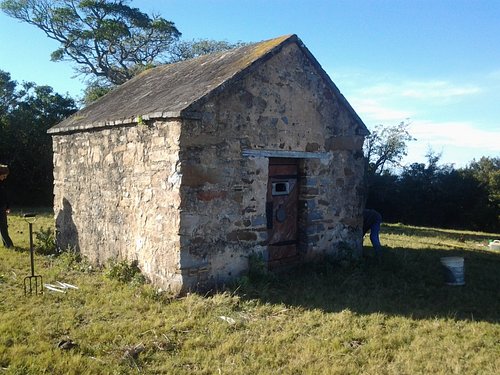
Bathurst is renowned for its quaint and very old architecture. The oldest Building in Bathurst is the powder magazine, built by the military before the arrival of the settlers. Bathurst is renowned for its quaint and very old architecture.
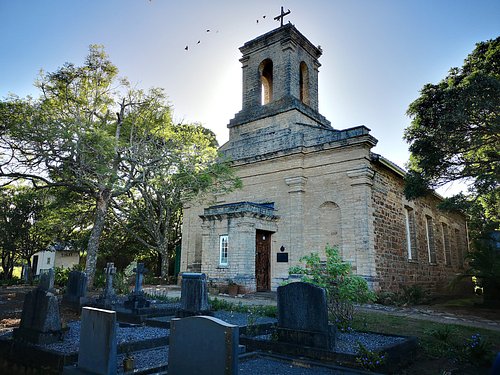
The oldest unaltered Anglican church building in South Africa is St. John’s in Bathurst.
The settler blacksmith Thomas Hartley built the original Bathurst forge in 1821. In 1831 it was converted into a pub, the oldest licensed inn of South Africa. Famous settler Jeremiah Goldswain bought it for his son-in-law in 1853. He added rooms where the forge had been and turned it into an inn called the Bathurst Arms. The inn survived fire and looting during the frontier wars, and during World War II was renamed ‘The Pig & Whistle‘ by servicemen from the nearby air school. Many of the original settler houses and other buildings have been preserved, and there remains much of the look and feel of an English village of the early 19th century.
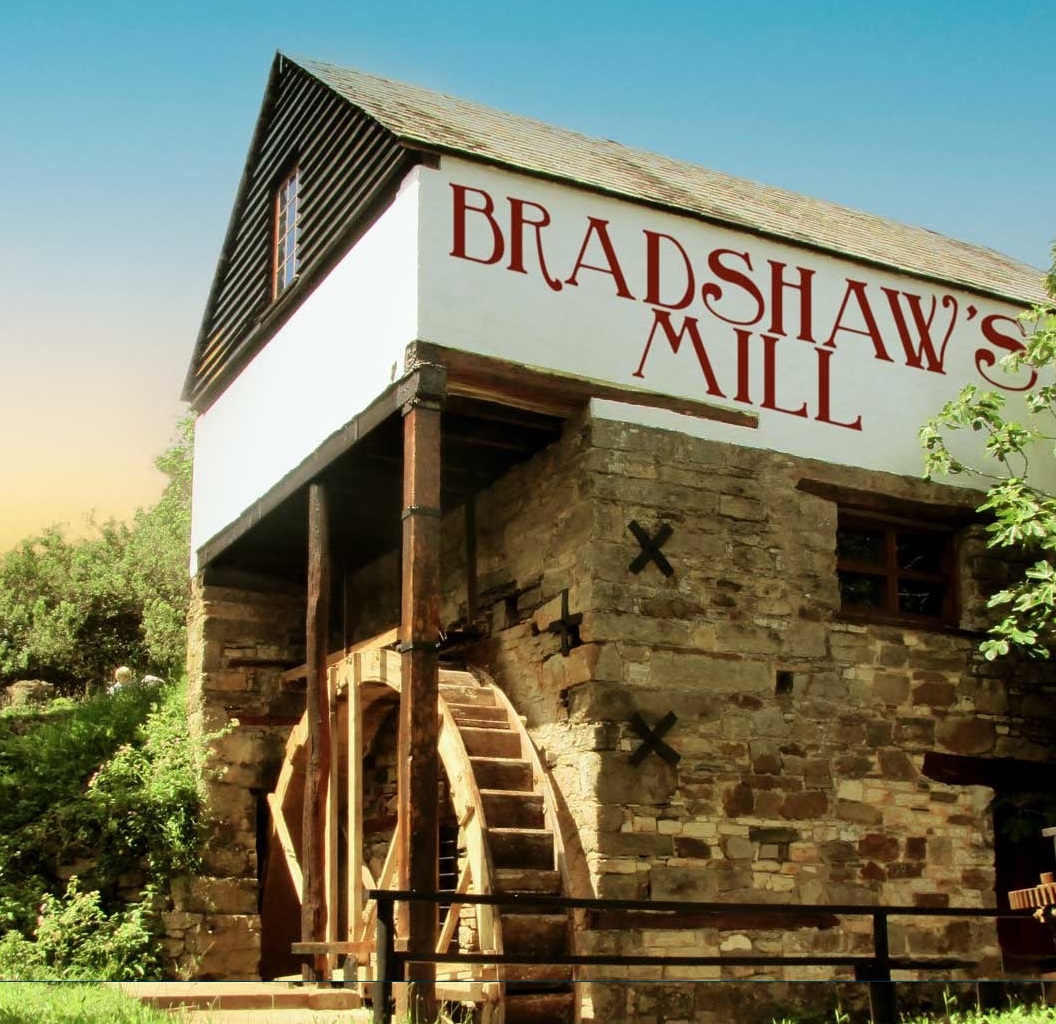
Weaver Samuel Bradshaw built the wool mill in 1822. As a result, Bathurst became the wool industry hub in the mid-1820s. By 1825 wool from the Settlers’ sheep was being used to make coarse cloth. In 1835 the 3rd story was added and corn milling began. Unfortunately, the mill was burned down in 1835 by Xhosa warriors, but it was rebuilt a year later. The mill was then used for grain. It’s use was discontinued in the 1900s. In 1981 it was restored and today it stands as a reminder of the area’s rich history and fascinating heritage. This water-driven wool mill contains a working water wheel and is now a Provincial Heritage Site.
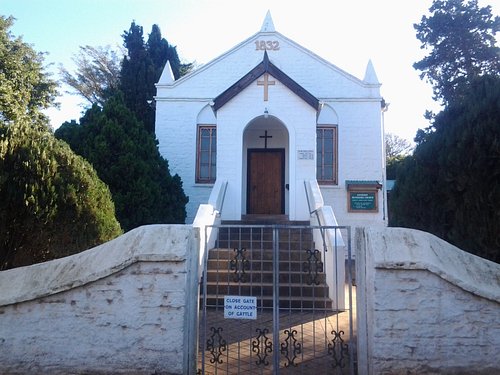
Samual Bradshaw also built the Wesleyan chapel (1832) and the Anglican Church (1837). The settlers withstood the attacks of the Xhosa by fleeing to the churches during the Sixth Frontier War of 1834-35. During the War of the Axe (1846), both churches became fortresses where the inhabitants again took refuge until military relief arrived. The Wesleyan chapel contains the family Bible of Jeremiah Goldswain. St John’s Church is the oldest unaltered Anglican church in South Africa. A sanctuary in the Frontier Wars of 1834, 1846 and 1851 for hundreds of Settlers. The first service in this church was held on 1 January 1838.
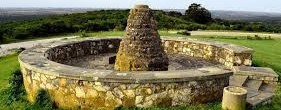
A circular Toposcope is located on a lookout point near village. It was constructed around the original stone beacon from which many 1820 settlers were shown their allotments of land. The stones of the toposcope were recycled from old settler homes. While you’re enjoying the view, imagine yourself as one of the 4 500 settlers (who were mainly traders or craftsmen) dumped as a human shield in a frontier war, on 100 acres without even a Do It Yourself (DIY) farming handbook. Inlaid in the toposcope are 57 bronze plaques recording details of each settler party. On a clear day there is a view from the Great Fish River to Kwaaihoek.
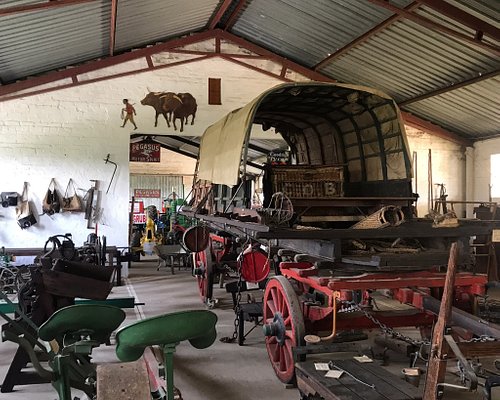
The Bathurst Agricultural Museum has a settler display of over 2,000 farming implements, equipment and accessories, including tractors and dairy utensils. The museum was established in 1970, and now also houses the Port Alfred museum, after its closure in 2024.
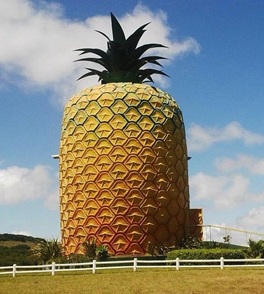
The settlers who arrived in the 1820s struggled to grow crops in the areauntil the first pineapple was planted in 1865. To honour the fruit that brought in the cash flow, the community built the Big Pineapple that stands 16,7 metres tall. Made of metal and fiberglass, you can enter the three-story building to use the observation platform and visit the museum dedicated to the fruit. The museum is on a farm known as Summerhill Pineapple Farm, an 1820 Settlers farm. In 1833, John Hawkins, who was a founder member of the Bathurst Agricultural Society, purchased the farm. He was also one of the first farmers to plant pineapples. The Big Pineapple represents the region’s pineapple industry in Bathurst and is the World’s Largest Pineapple. The gigantic structure is a tribute to their agricultural success. It was built with the intention of giving more exposure to the local pineapple industry. The Bathurst area delivers over 135 000 tons annually to factories in East London. The Big Pineapple structure has four floors, including a gift shop with a variety of pineapple products, a museum covering the history of pineapple farming in South Africa, a video room, and an observation deck with views over the surrounding farmlands to the Indian Ocean.
While time has moved slowly in Bathurst attracting those seeking a more peaceful lifestyle, academics (Rhodes University is only 40 kilometres away), and retirees. There are also a growing number of artists in Bathurst. Amongst them, award winning potter Richard Pullen, established his studio in 1998.
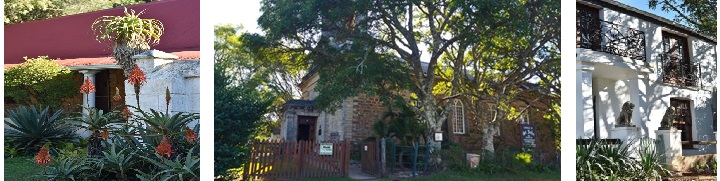
Many of the privately owned houses are also historical buildings, like the Stone cottage, the Rectory and various others, that are not open to the public. However, you can look at them from the outside on a meander through the village.
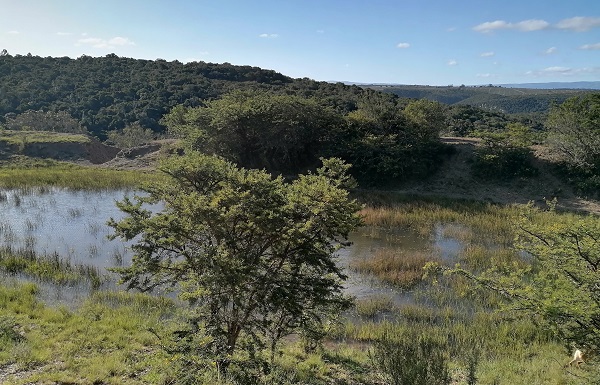
Just outside Bathurst is the beautiful Waters Meeting nature reserve, well worth a visit, either on foot or by car. (Entrance fee applies).
Then there is also the Bathurst Commonage. This, the largest commonage of southern Africa was bestowed to the people of Bathurst by Queen Victoria in the 19th Century. It is a wonderful place for walking, grazing cattle and much more. See more about the commonage here.